

BLOG
ALSO VISIT: | TheCompletePlayer | ZenHockey | HockeyType | 30Day Challenge | Hockey Grit Book |
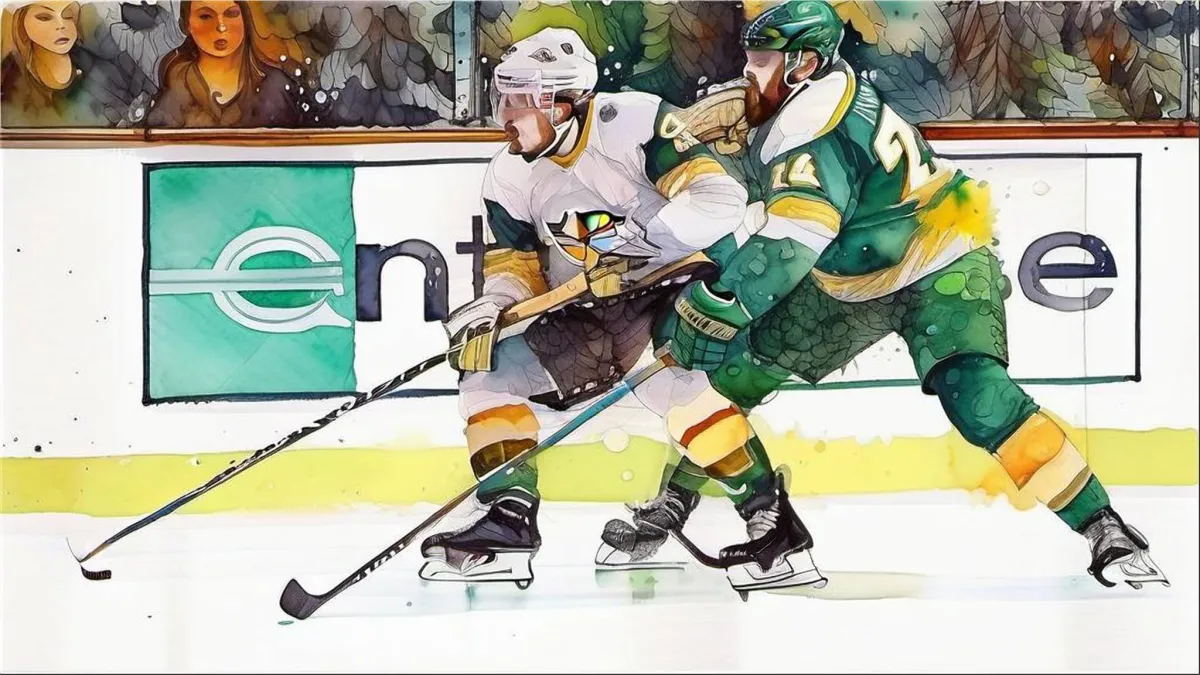
Why Some Great Players Struggle in the Playoffs—and How to Break Through
TL:DR Audio Version:
Every playoff season, the same question pops up:
“Why do some high-performing players fade when the games matter most?”
Today I listened to NHL radio on SiriusXM and they talked about it for an hour and as much as I love the segment I was kind of disappointed with some of the analysis.
They tossed around comments like
“They don’t show a willingness to do more"
“They don't seem to want it enough”
“They just fade in the big moments.”
Let’s be real—no disrespect to their analysis but those takes are lazy.
We’re talking about pro athletes who’ve spent their entire lives training, grinding, sacrificing, and building careers for the exact opportunity to shine on the biggest stage.
They do care.
They do want it.
And it’s not about willingness or effort.
So… what is it?
The Truth: Playoff Hockey is a Different Game
The playoffs aren’t just “more important games.”
They’re faster. Tighter. Heavier. Less time. Less space. More pressure. More unpredictability.
What used to work in the regular season gets squeezed out by tighter checking, faster close-outs, and systems that punish hesitation.
It’s not that players aren’t trying hard enough—it’s that their habits, tendencies, and mental processing get exposed under extreme conditions.
The Real Reason Some Players Struggle:
Cognitive Load + Emotional Rigidity
Here’s what often happens:
Overthinking replaces instinct. In the regular season, players operate on rhythm and feel. In the playoffs, the stakes mess with that rhythm. Instead of flowing, they freeze.
Fear of mistakes overrides the desire to make plays. Self-protection kicks in. You start playing “not to lose” instead of “to win.”
The brain tightens up. Instead of scanning, adapting, and reacting, the mind gets stuck trying to control too much. That slows the game down—but not in a good way.
They don’t adjust their mental game. The playoffs require a mental recalibration, not just a physical ramp-up. When that doesn’t happen, performance drops.
Signs a Player is Struggling in the Playoffs (It’s Not Just the Stats)
They hesitate with the puck—plays take an extra half-second.
They stay on the perimeter instead of attacking space.
They’re late to support or misread timing windows.
Body language shifts—shoulders tight, eyes darting, head down.
You hear phrases like “I’m just trying to keep it simple” (which often means they’ve lost trust in their instincts).
So What’s the Solution?
Players don’t need more effort. They need more clarity and more flexibility—mentally and emotionally.
Here’s where to start:
Shift from Outcome Focus to Process Focus
The pressure of “I have to score” or “I can’t mess up” hijacks the brain.
Replace it with a clear, controllable mission focus like:
Win your shift.
Beat your check.
Be first to pucks.
Execute your role.
Rehearse High-Stress Situations Mentally
The playoffs feel different, so prepare your brain for it.
Mental rehearsal under pressure scenarios—tight-checking, last-minute, hostile crowd—helps normalize the intensity.
Instead of fearing it, you begin to expect it.
And that familiarity is everything.
Anchor to an Identity, Not Emotion
When the game ramps up, emotion spikes. That’s when players get reactive.
But if you’ve anchored to an identity like:
“I’m a puck-winning, play-driving competitor who shows up when it matters most.”
—then you’re guided by values and identity, not emotion and pressure.
Identity makes you stable. Emotion makes you erratic.
Breathe + Widen Your View
In pressure moments, vision literally narrows.
Teach players to use a reset breath and soft focus gaze before faceoffs, between whistles, or after mistakes.
It’s not fluff—it’s neuroscience. It reopens the brain’s ability to scan, read, and make fast decisions.
Watch Your Inner Voice
The players who struggle most in the playoffs often have an inner voice that tightens the leash:
“Don’t mess this up.”
“You better be the guy.”
“This is where you prove everything.”
Players who thrive tend to hear:
“You’ve prepared for this.”
“Just be you.”
“One play at a time.”
This is where self-coaching comes in strong. That voice matters more than fans, coaches, or media. If you haven't read my upcoming book, "Be Your Best Coach", DM me and I'll send you an audio copy.
One More Thing Most People Miss…
Not every player reacts the same way to pressure.
Some get quiet and internal. Others get emotional and aggressive. Some overanalyze. Others shut down. And that’s not random—it’s rooted in how they’re wired.
That’s why knowing your HockeyType is such a massive advantage.
Because your type—Explorer, Builder, Director, or Connector—affects how you:
Prepare for big moments
Respond to mistakes
React to pressure
Handle expectations
Rebound from setbacks
Most players (and coaches) are flying blind when it comes to this. They try to copy what worked for someone else, not realizing it clashes with how they naturally operate.
But when you know your type, everything changes. You gain insight into:
What throws you off
What fuels your confidence
What to lean into under pressure
What to stop wasting energy on
You stop guessing—and start growing.
You play with more clarity. More confidence. More edge.
If you haven’t yet, head to HockeyType.com and find out your type. It’s quick, it’s powerful, and it might be the thing that finally unlocks your full potential. And if you’re a coach or GM, it’s a game-changing tool for understanding your players and building a mentally sharper, more cohesive team.
Because here’s the truth:
Maybe most pro players won’t read this blog.
But I know a lot of you reading want to be pros—or at least want to get everything you can out of the game.
And this right here?
This is the kind of stuff that separates good players from great ones.
Not just more skill. More self-awareness.
Not just more grind. More mental clarity.
That’s what shows up in big moments. That’s what makes a difference when everything’s on the line.
And if you’re serious about leveling up, now’s the time to start training the part of your game that most players ignore.
Go deeper. Think bigger.
And don’t just play harder—play smarter.